There’s nothing quite like the anxiety of unpacking a box after a long-distance move hoping your grandmother’s china or your favorite glass lamp made it in one piece. If you’ve ever experienced the disappointment of opening a box of broken belongings, you know that protecting fragile items is no small detail.
Moving long distance comes with more handling, longer travel times, and greater chances for your boxes to shift or stack unevenly. That makes thoughtful packing even more essential especially when it comes to your most delicate possessions.
So, how do you actually keep fragile items safe across hundreds (or thousands) of kilometres? Let’s walk through it.
Why Fragile Items Need Special Attention During Long Moves
A move across town is one thing but long-distance moves often involve:
- Multiple transfers between trucks and depots
- Bumpy roads and extended time in transit
- Temperature shifts, humidity, and elevation changes
- Long hours where boxes may shift or compress
All these increase the risk of fragile items breaking. That’s why it’s worth putting in the extra care upfront.
Must-Have Packing Materials for Fragile Items
Don’t rely on just a few sheets of newspaper. Here’s what you really need to keep breakables secure:
- Bubble wrap – for cushioning glass, ceramics, and tech
- Packing paper – clean, ink-free paper to prevent scratches
- Foam sheets or corner guards – for frames, mirrors, and electronics
- Double-walled boxes – stronger than standard ones
- Packing peanuts or crumpled paper – to fill gaps and reduce movement
- Packing tape – strong enough to seal and reinforce box edges
- “Fragile” stickers or markers – clearly label every side
Pro Tip: If it’s important or expensive, double-box it.
Step-by-Step: How to Pack Fragile Items the Right Way
Here’s a simplified, safe packing routine you can follow:
1. Prep the Box
Add a 2–3 inch layer of crumpled packing paper or foam peanuts at the bottom.
2. Wrap Items Individually
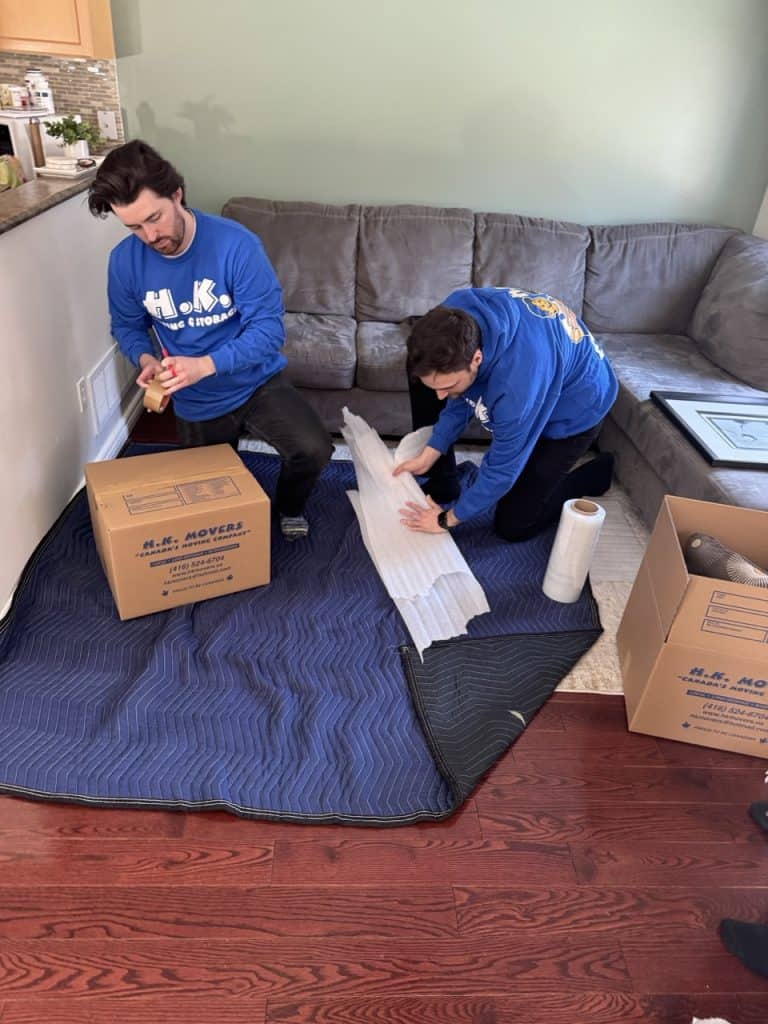
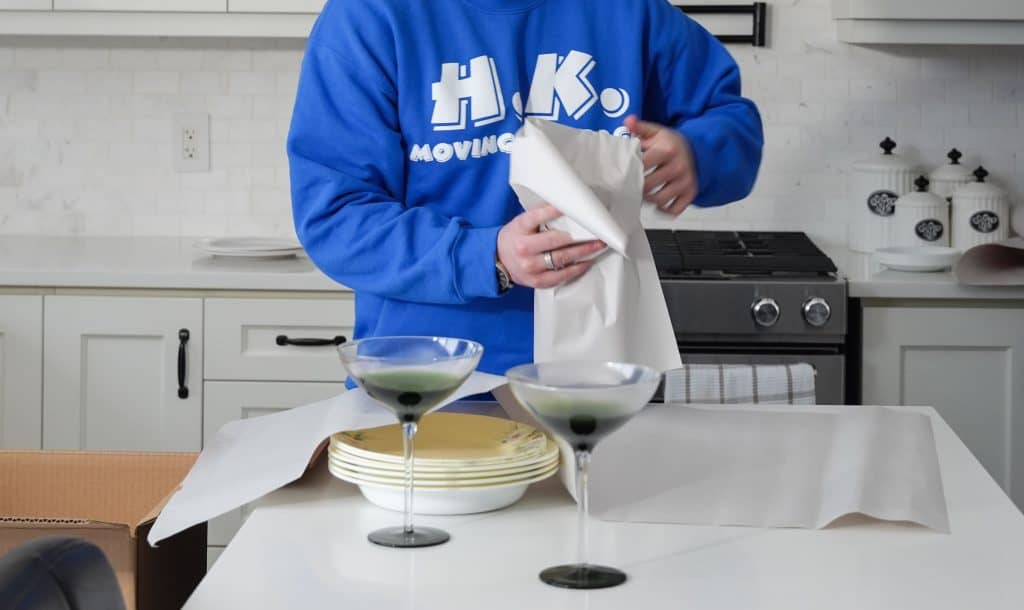
Don’t group-wrap glasses, mugs, or dishes. Wrap each item separately in bubble wrap or paper.
3. Use Dividers for Small Items
For glasses and jars, use cardboard dividers inside the box to prevent clinking and collisions.
4. Fill Gaps and Layers
After one layer of items, add more paper before starting the next. No empty spaces.
5. Seal & Label Clearly
Use sturdy tape to seal the box and label all sides: “FRAGILE – THIS SIDE UP.”
Packing Tips by Item Type
Different items need different care:
| Item Type | Packing Strategy |
|---|---|
| Plates | Pack vertically like vinyl records, with foam between each |
| Glasses | Wrap stems carefully, use dividers |
| Electronics | Use original packaging if possible or anti-static wrap |
| Mirrors & Frames | Corner protectors + cardboard sheets + wrap |
| Lamps | Remove bulbs, wrap the base and shade separately |
| TVs | Use TV boxes with foam inserts; never lay flat in transit |
Common Mistakes to Avoid
- Overloading boxes: Too much weight = more damage risk
- Skipping labeling: Movers won’t know to be extra careful
- Using old, worn-out boxes: Compromised strength leads to collapse
- Relying only on soft items (like towels): These shift too easily
- Not taping the bottom properly: Fragile boxes must be reinforced
What About Climate-Sensitive Items?
Long-distance moving means your belongings may sit in a truck overnight or pass through extreme weather. For fragile items like:
- Candles (they melt)
- Liquor bottles (glass + liquid = risky)
- Vinyl records (can warp)
- Fine art or instruments
Ask your movers about climate-controlled options or special packing solutions.
Should You Let the Pros Handle It?
You absolutely can pack fragile items on your own but if you’re short on time, tools, or confidence, it may be worth calling in professionals.
Reputable movers (like H.K. Movers) use proper techniques, high-quality supplies, and have trained staff who know how to secure everything from wine glasses to widescreen TVs.
Final Moving Day Checklist for Fragile Items
Before you hit the road, double-check:
- All fragile boxes are clearly labeled
- Nothing is loose or rattling inside boxes
- Valuable items are accounted for and insured
- Boxes are stacked with light ones on top
- A special area in the truck is reserved for delicate items
Moving with Care from Start to Finish
At H.K. Movers, we understand how much your fragile items mean to you whether it’s your grandmother’s china or your new smart TV. That’s why our team handles every item with attention, precision, and care, especially during long-distance moves.
We offer a full range of services to make your move easier:
- Residential Moving
- Long-Distance Moving
- Commercial & Office Moves
- Professional Packing & Unpacking
- Specialty Item Moving (pianos, antiques, electronics)
- Secure Storage Solutions
We proudly serve customers across Toronto, Mississauga, Brampton, Vaughan, Markham, Scarborough, and surrounding areas with long-distance service available across Ontario and beyond.
Need help with your move? Whether you’re going cross-province or cross-country, we’ve got your back.
Call us now at (416) 524-6704 or check here to request a free quote.
FAQ: Protecting Fragile Items During a Long-Distance Move
Q: Can I use towels or clothes to wrap fragile items? A: You can, but it’s better as supplemental padding. Towels shift during transit. Use proper packing materials as your first layer of protection.
Q: Is it safe to ship a TV lying flat? A: No. Always keep TVs upright. Laying flat can damage the screen due to internal pressure.
Q: How early should I pack fragile items? A: Ideally, 1–2 weeks before the move. Early packing allows time to carefully secure everything without rushing.
Q: What if I don’t have the original boxes for electronics? A: Use double-walled boxes, anti-static bubble wrap, and label clearly. Many moving companies also offer specialty boxes.